

Services

Preventive Orthodontics
Prevention is the best approach to ensure long-term oral health. Our purpose is, by simple means, to prevent the creation of orthodontic problems where possible.

Functional Maxillary Orthopedics (MFO)
The use of MFO with the use of functional devices, aims to affect the shape and position of the jaws. It may also direct the development of jaws in younger patients.

Children & Adult Orthodontics
Orthodontics, in both adults and children, addresses and corrects malocclusion. The restoration of proper occlusion is a key factor for long-term oral health.

Cosmetic Orthodontics
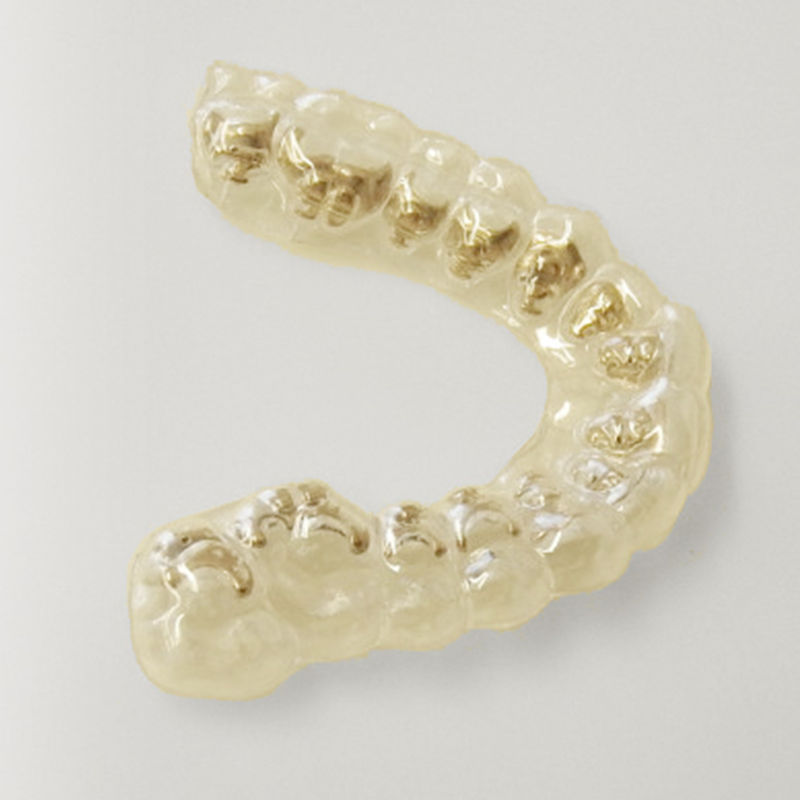
Cosmetic orthodontics mainly targets adults and relates to the correction of orthodontic problems, with either invisible or lingual brackets, or invisible aligners.
The team
Vasilis Galanis
Specialist Orthodontist
Vasilis is the head of the team and loves new technologies. He is characterized by attention to detail and his personalized care to patient needs.

Eleni Galani
Reception
With 30 years of experience in welcoming orthodontics’ patients, Eleni is ready to respond to any request, with patience, flexibility and with a genuine smile.

Katerina Kontokosta
Assistant
Katerina, a nursing graduate from a Technological Educational Institute, is the doctor’s assistant, and has a key role in the smooth operation of the practice, with a wide range of responsibilities.

Euripides Kontodimos
Head of laboratory
Euripides, a nursing graduate from a Technological Educational Institute, is the head of the radiology and dental laboratory of the practice, offering valuable services.
Personalized services
Our team is committed in providing quality services, with the aim of responding to the specific needs of each member of your family.
FAQ
Please find below some advice regarding your children’s teeth:
- Observe your child’s teeth. If you notice crooked teeth or gaps between the teeth, or if the top teeth fully cover the bottom teeth, you must consult an orthodontist.
- If your child’s top teeth don’t occlude and there is a gap between the top and bottom teeth, that can be a sign of an orthodontic issue.
- Top teeth that stick out may break if your child falls and it would be important that they’d be treated on time.
- The protrusion of the lower jaw demonstrates severe malocclusion, which must be treated immediately.
- Narrow palate and top teeth that bite further in from the bottom teeth, may even result in an asymmetrical face unless immediately treated.
- If there is premature loss of baby teeth because of dental caries, consult a specialist.
- Prolonged use of a pacifier, thumb-sucking and continuous mouth breathing (instead of the normal nose breathing) complete the picture of a future orthodontic patient.
The best age for your child’s first examination is at the age of 6–7. This examination will also determine the appropriate time to start treatment, in the event an orthodontic problem is found. Postponing the treatment of problems found at an early age makes their future treatment more difficult.
The start of treatment in young children (age 6-–7) is appropriate where we wish to limit the deterioration of certain orthodontic disorders, which are quite difficult to treat later on (e.g., in adolescence). Such disorders are skeletal disharmony between upper and lower jaws, overbites, and the severe lack of space for the eruption of the permanent teeth. At this early stage, the abovementioned disorders are treated easily and with stable results. However, most patients with early orthodontic treatment will need a second stage with braces later. Early orthodontic treatment of crowding of the front teeth of the lower jaw is usually not appropriate, especially if it is not accompanied by another clinical finding. This – the early orthodontic treatment of simple crowding – would be malpractice (unnecessary medical practice).
The second stage of the orthodontic treatment with braces is carried out when their permanent teeth have erupted in their mouth (around the age of 10–12). Its aim is to ‘straighten’ all teeth and achieve good occlusion of the upper and lower denture. The main criterion for the starting point of a comprehensive orthodontic treatment with braces is the child’s dental age (how many and which permanent teeth have erupted in the mouth), which does not necessarily coincide with the child’s actual (chronological) age.
Certainly! Age is not a limiting factor for orthodontics. Every adult in good health, with healthy teeth and gums, can receive orthodontic treatment. A significant percentage of the patients of our practice are adults.
The duration of treatment varies depending on the type and severity of the disorder. The average duration of a comprehensive orthodontic treatment with braces, of a Class II malocclusion (which is one of the most commonly found orthodontic problems) is 2 years.